Home · Program · Invited speakers · Registration · Call for abstracts · Sponsorship · Committee
──────────
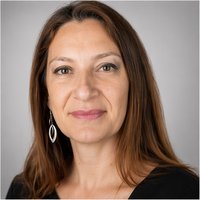
Manuela Buonanno is a leading researcher in far-UVC science whose work has helped define the field’s evidence base. Based at Columbia University Irving Medical Center, she has made major contributions to the understanding of far-UVC efficacy, skin and eye safety, and its potential for use in occupied spaces. She has co-authored foundational studies on airborne pathogen inactivation and the biological effects of 207 nm and 222 nm exposure. Her research continues to shape how far-UVC is evaluated for real-world deployment.
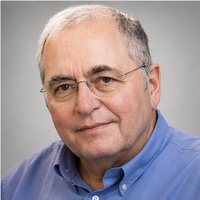
Edward Nardell is one of the leading figures in airborne infection control and UV-based air disinfection. A physician and Professor of Medicine at Harvard Medical School, he is widely known for decades of work on tuberculosis transmission, upper-room UV, and infection control in real occupied environments. His research helped establish the public-health case for air disinfection and now extends to far-UVC in real-world settings. His perspective brings rare historical depth to one of the conference’s central questions: how UV technologies can reduce airborne infection risk effectively and responsibly.
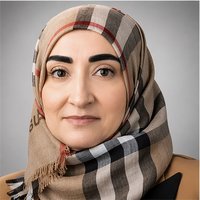
Jameela Al Salman is an infectious disease specialist and Associate Professor at the Arabian Gulf University with senior leadership experience in infection prevention, antimicrobial stewardship, and healthcare quality. In Bahrain, she works across clinical care, infection control, and health-system decision-making, with direct experience in how new infection-prevention strategies are evaluated and implemented in practice. Her perspective brings a vital clinical and policy dimension to ICFUST, grounding discussions of far-UVC and other technologies in the realities of healthcare adoption and use.
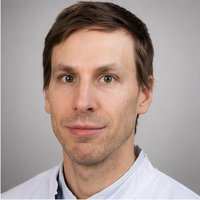
Johannes Schleusener is a researcher at Charité – Universitätsmedizin Berlin whose work focuses on the scientific assessment of far-UVC safety. His research examines wavelength-dependent effects in skin and corneal tissue, including DNA damage and the implications of both intended and unintended human exposure. By contributing quantitative evidence on tissue-specific risk, he is helping define how far-UVC safety should be evaluated as the field moves toward broader real-world use.
More speakers to be announced