15th Nordic Congress on Clinical Chemistry and Clinical Physiology, Århus 1975
In 2026, we are holding the 40th Nordic Congress in Clinical Biochemistry. In 2025, it is 50 years since the Nordic Congress was last held in Aarhus — back in June 25-27, 1975 — when it was known as the 15th Nordic Congress on Clinical Chemistry and Clinical Physiology.
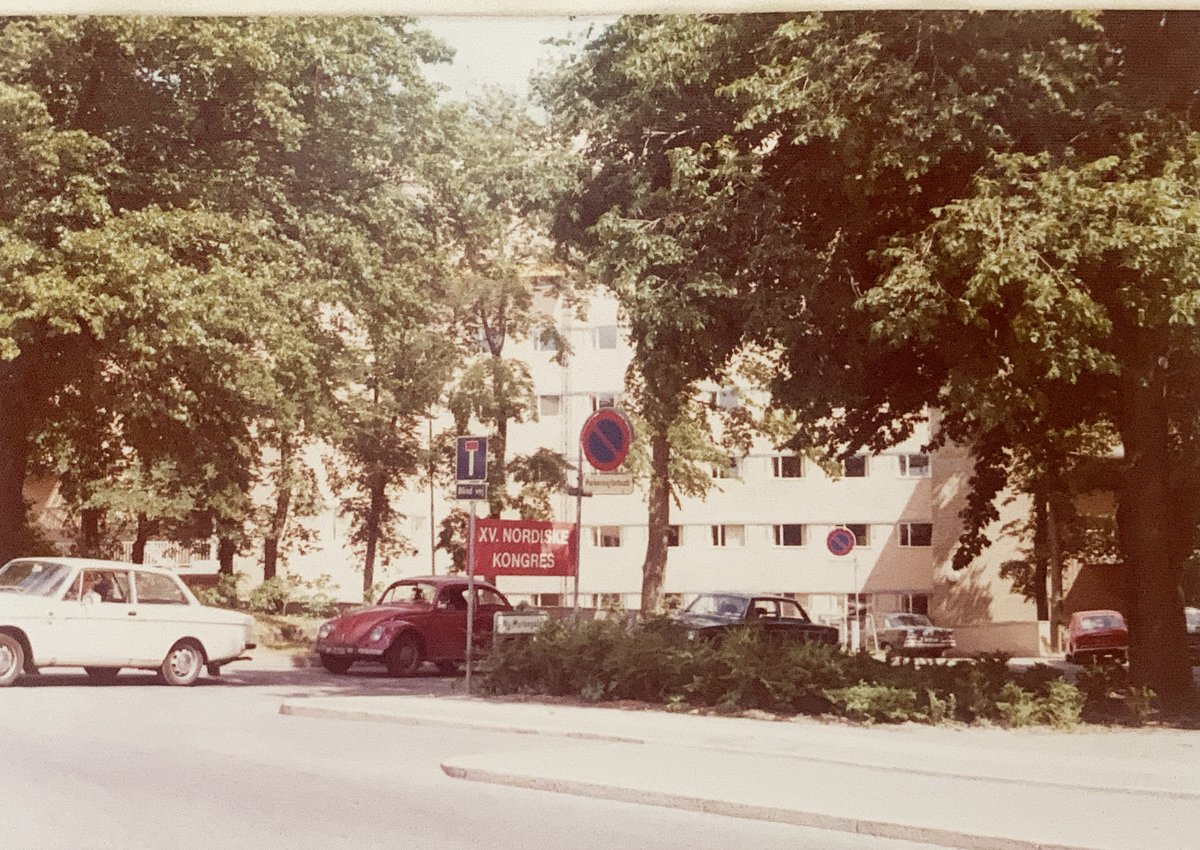
Back then, Aarhus was spelled “Århus”, and the congress committee included Professor Rud Keiding from the Municipal Hospital and Chief Physician NSC Heilskov from the County Hospital. Chemist Arne Brink Nielsen took care of the planning. It may not have been exactly straightforward at the time, as it was quite common that if you did something one way at the Municipal Hospital, the County Hospital would do it the opposite way — and vice versa.
Both hospitals have since closed, and their departments merged into the new Aarhus University Hospital. Every now and then, you can still sense the ghosts of those old cultures lingering about!

The congress was held at Aarhus University. Keiding in the middle, Brink Nielsen to the right.
There were around 350 active professional participants, and many also brought along partners and children. So, a lot of emphasis was placed on social activities during the day, with organised trips to museums and sights around East Jutland.
Parallel sessions ran on Clinical Chemistry, Clinical Physiology, and Nuclear Medicine. A particular highlight was the symposium on “EDB” (elektronisk data-behandling). It was clear that EDB was high on the wish list for many labs. The message was that introducing EDB made good sense once you start losing oversight and control of your analysis workload….
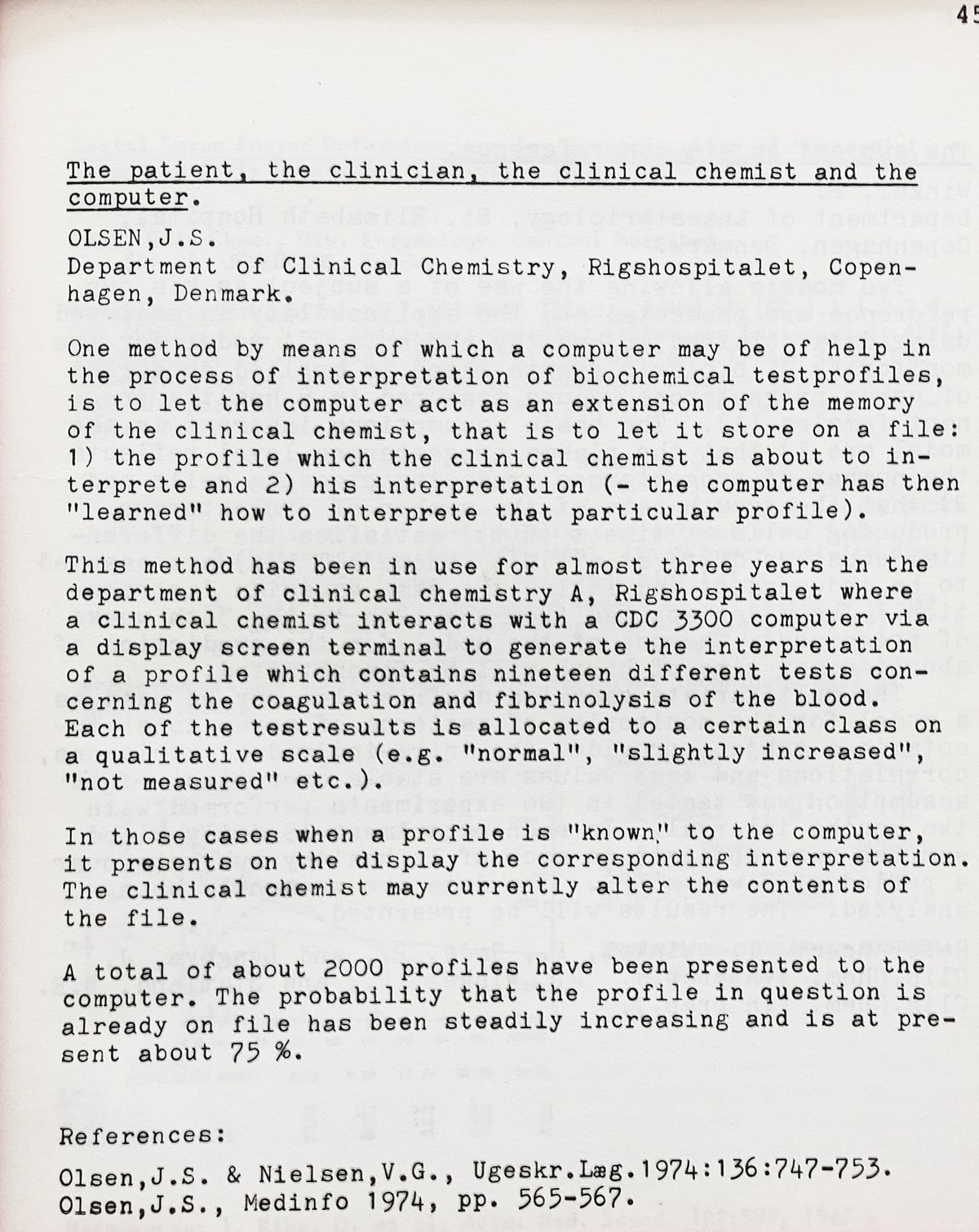
A visionary young doctor from the Clinical Chemistry Department at Rigshospitalet in Copenhagen, Dr Jørgen Steen Olsen, submitted an abstract on how computers could assist doctors in clinical decisions, and how the computer can learn to integrate the results. Quite a gasp-worthy idea back then! AI development has certainly been a slow burner. You can read the abstract below.
Many of the attendees, session titles and lectures still sound familiar and carry a rich sense of history.
Holger Jon Møller